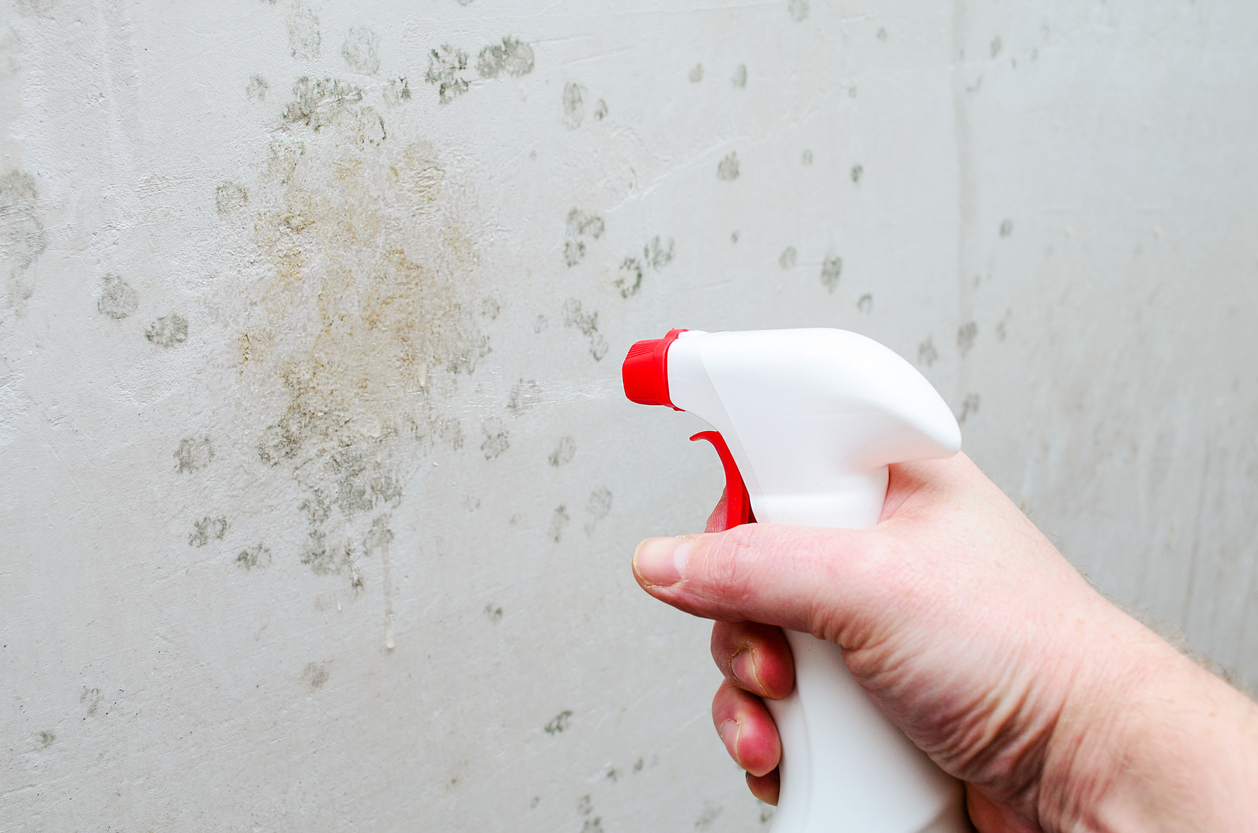
Let’s say you’ve spotted mold in the corner of your bathroom wall. It’s pretty tempting to just grab a bottle of bleach, scrub until the dark spot disappears, and get on with your day. But if you do, you’re likely to find the dark spots back a week or two later, in the same place, and maybe even a little bigger.
That’s because, believe it or not, bleach isn’t designed for this kind of job. While it can kill surface mold on materials like tile and glass, on drywall and wood, it can’t penetrate deep enough to reach the mold’s root structures. Worse, the water in bleach can actually feed what’s left behind.
Lasting mold removal requires finding and fixing the moisture source first.
Key Takeaways: How to Clean Mold with Bleach
- Mold grows tiny root-like structures that burrow into porous building materials like drywall and wood.
- Bleach’s active ingredient, sodium hypochlorite, doesn’t penetrate porous materials far enough to reach the mold’s root system.
- Roughly 90% of household bleach is water, so on porous surfaces, that water soaks in and can give mold more moisture to grow.
- The EPA doesn’t recommend bleach for routine mold cleanup of any kind, but especially not on porous materials. It’s rarely possible to achieve complete removal through surface treatment.
- Mold will return after any cleanup, professional or DIY, if the moisture source driving its growth hasn’t been addressed.
When Bleach for Mold Removal Works
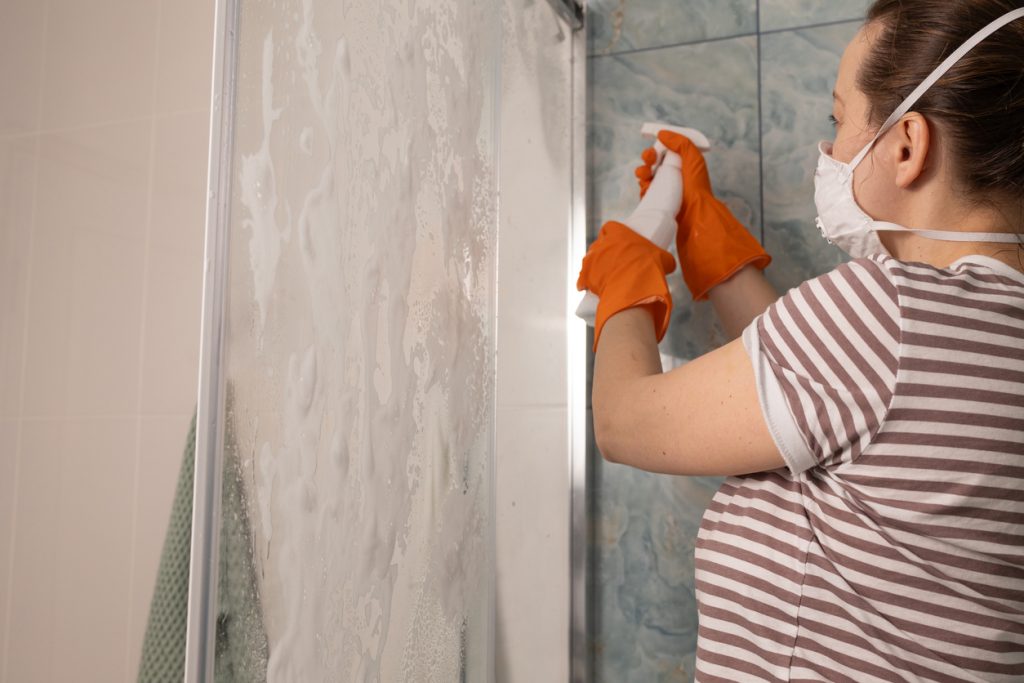
Bleach works by releasing sodium hypochlorite, an oxidizing agent that breaks down the cell structure of mold on contact. On hard, non-porous surfaces like tile, shower glass, and sealed countertops, it does exactly what you’d expect: kills mold and removes stains.
For general bathroom and kitchen use, it’s a reasonable household cleaning product. Still, the EPA’s guidance on mold cleanup for hard surfaces recommends scrubbing with detergent and clean water, with bleach as an optional addition. If you notice minor surface mold or mildew on bathroom surfaces, tile, tubs, or sealed glass, you can try a diluted solution of one cup of bleach per gallon of water. The key is to dry it completely afterward, because any residual moisture invites the mold to return.
But the surface and the volume matter a lot. If growth covers more than 10 square feet, the EPA recommends calling a professional. And when you start talking about drywall, wood, ceiling tiles, or other porous materials, the chemistry of bleach doesn’t work in your favor anymore.
Why Bleach Fails on Porous Materials
Mold doesn’t just grow on top of porous materials. It grows into them.
Mold sends microscopic, thread-like root structures called hyphae into building materials, so small they’re 20-50 times thinner than a human hair. On drywall, those hyphae penetrate the paper facing and burrow into the core. On wood framing, they work their way into the grain.
That means what you see on a moldy wall or ceiling tile is just the tip of a colony that’s embedded deep below.

Without launching into a chemistry lesson, the molecules in bleach’s active ingredient, sodium hypochlorite, are too large and too tightly bonded to make their way through the pores in these materials. So the chlorine bleach can only touch the moldy surface, remove the visible stain, and then evaporate.
How the Water in Bleach Makes Your Mold Problem Worse
Household bleach is roughly 90% water, and mold requires moisture to survive. See the issue?
While the chlorine in bleach evaporates at the surface, the water component keeps going and soaks into the material. So you’ve removed the visual evidence of the problem and added moisture directly to the root system underneath. The mold often regrows within two to four weeks, sometimes spreading slightly wider than before.
PSA: Dead Mold Isn’t Harmless
Even on the small fraction of surface mold that bleach does kill, the cleanup work isn’t over. Dead mold fragments can remain on the surface and stay allergenic. The EPA notes that whether mold is alive or dead, it can still trigger allergic responses. Removing dead mold is part of the job, and getting it all is much harder than it seems.
What’s the Best Way to Kill Mold? Professional Mold Remediation
We know. Most people aren’t thrilled at the idea of having to call in a mold remediation professional. But there are no quick fixes for getting rid of mold—at least not effective ones.
Professional mold remediation follows the ANSI/IICRC S520 standard, which is the industry benchmark for how this work gets done. And the work looks nothing like scrubbing with a cleaning product.
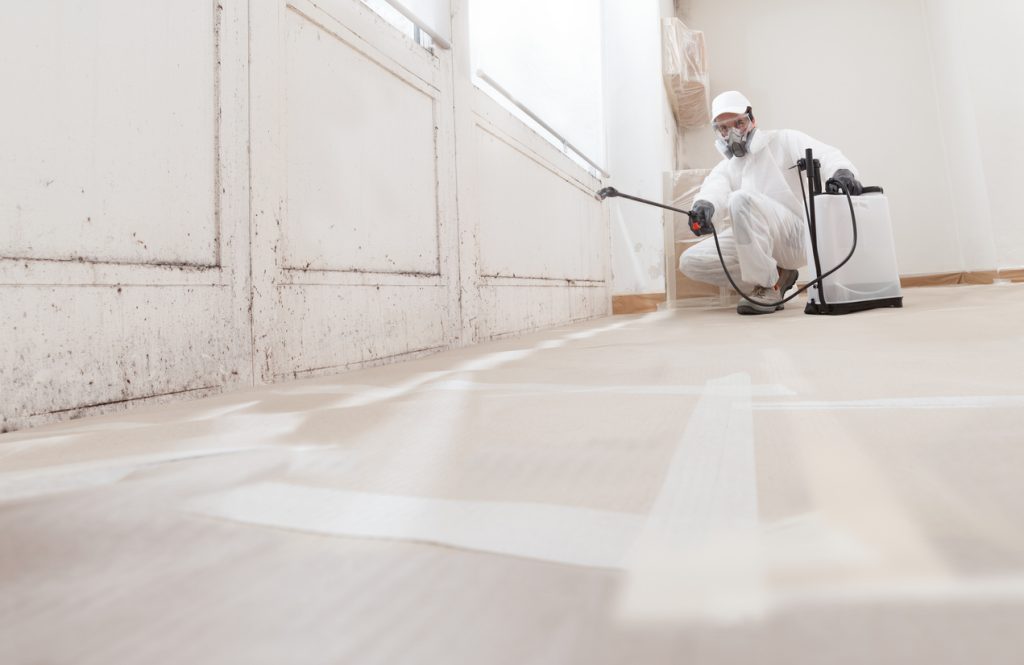
The Mold Remediation Process
It all starts with finding and eliminating the moisture source. Whatever’s feeding the mold—a leak, a humidity issue, a failed vapor barrier in a crawlspace—you have to stop it, or else no remediation effort will hold.
From there, physical containment with polyethylene barriers and negative air pressure zones prevents mold spores from spreading to unaffected areas during the work. Porous materials with significant growth, such as drywall, insulation, and carpet padding, are often removed rather than cleaned.
The remaining surfaces are HEPA vacuumed and treated with EPA-registered antimicrobials. The space is dried to baseline moisture levels and verified by post-remediation air quality testing before the containment measures come down.
For a deeper look at how the full process works, see our breakdown of The Three R’s of Mold: Removal, Remediation, Repairs.
What to Look for in a Professional Mold Company in Tennessee
Look for an IICRC-certified team with mold licensing. The state of Tennessee doesn’t require mold licensing, but true professionals do. ASDT does.
Every one of our technicians holds IICRC certification and the full mold license, with several team members reaching master designation—the highest possible level of certification a professional can receive in this industry.
Our team uses moisture meters, borescopes, and laser thermometers to locate mold that isn’t visible on the surface, combined with IAQ lab testing to identify the type of structural mold you’re dealing with. These tools help us identify mold that others miss and mount a targeted attack to remove that mold for the long haul.
What to Do If You’ve Already Used Bleach
If you’ve cleaned mold with bleach and it came back, that probably means the mold growth was in a porous material, and you didn’t reach the roots.
Watch for these signs that the problem has gone deeper:
- Mold returning in the same area within a few weeks
- A musty smell that the bleach didn’t clear
- Discoloration or soft spots in drywall
- Growth reappearing at baseboards or trim
At that point, your next best step is to arrange a professional inspection. Not because DIY is always the wrong call, but because recurring mold on a porous surface means there’s a moisture source the cleaning hasn’t addressed.
Different mold species carry different dangers, and identifying what you’re dealing with is part of making a smart decision about what to do next. Learn about the 10 warning signs of mold toxicity if you’re concerned about exposure.
FAQs About the Best Ways to Kill Mold
Does Clorox kill mold?
In certain situations, yes, but this can be a point of confusion for homeowners. Clorox’s own website states that bleach is EPA-registered to kill mold. Technically, that’s true, but the registration only applies to hard, non-porous surfaces like tile, tubs, and glass. Nothing else.
Will bleach kill mold on drywall?
No. Drywall is especially susceptible to mold because its paper facing and gypsum core are both highly absorbent. When bleach hits the affected area, the stain lightens, but the colony is still alive below the surface. Only now, it has a little extra moisture to work with from the water in the bleach you just applied.
Does vinegar kill mold on drywall?
White vinegar penetrates porous materials better than bleach and kills a broader range of mold species. For very light surface mold on wood or grout, it’s a more effective option. That said, it still won’t fully eliminate a deep colony that has grown into drywall. Heavily contaminated material typically needs professional removal.
The Mold Is Telling You Something
Visible mold on a porous surface is a symptom, whether it’s of water damage, humidity problems, or ventilation issues. Bleach changes how that symptom looks, but it doesn’t change what’s causing it.
If mold in your home or business keeps coming back after cleaning, don’t brush it off. The health and safety of your property depend on finding the source of the issue and getting rid of it for good.
Get a Professional Mold Inspection in Tennessee & the Southeast
ASDT’s certified team uses advanced moisture detection and lab-grade air quality testing to find the true source of mold in commercial and residential properties. With 40+ years of service and full IICRC certification, we’re equipped to locate the source and remediate it properly.